
Helping oil and gas, water transmission, and infrastructure projects match external pipe coating systems to operating conditions, installation requirements, and project specifications.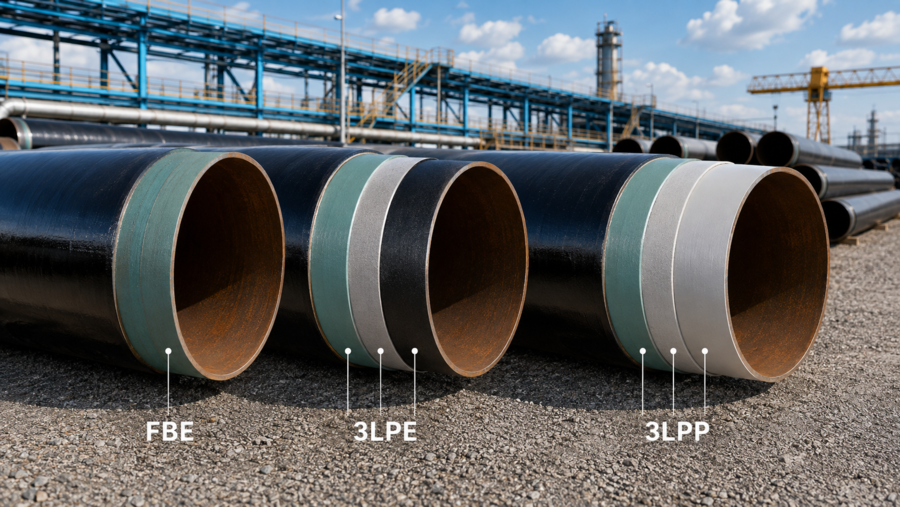
TIANJIN, CHINA, September 19, 2026 /24-7PressRelease/ -- External corrosion is a major consideration for steel pipe exposed to soil, moisture, chemicals, handling damage, and changing operating conditions. The appropriate form of external protection depends heavily on where and how the pipe will be used.
Baolai Steel supports international projects with external surface protection options including FBE, 3LPE, 3LPP, hot-dip galvanizing, painted finishes, and other external coating pipe solutions. These finishes do not serve exactly the same purpose. Galvanizing and painting are widely used for exposed, structural, fire protection, and other applications, while buried and industrial transmission pipelines often require coating systems designed around more specific corrosion, installation, and service conditions.
For that reason, this article focuses primarily on FBE, 3LPE, and 3LPP. The three systems represent different approaches to protecting pipelines where soil exposure, mechanical damage during installation, cathodic protection, and operating temperature can all influence coating selection.
What External Coating System Fits the Project?
For buried and industrial pipeline service, choosing between FBE, 3LPE, and 3LPP is not simply a matter of selecting a thicker or more complex coating. Each system combines corrosion protection and mechanical performance differently, so the decision should reflect the expected service environment.
Fusion-Bonded Epoxy (FBE) forms a tightly bonded epoxy layer directly on the prepared steel surface. Its relatively simple coating structure provides a continuous corrosion barrier without adding a thick thermoplastic outer layer. This makes FBE suitable for many buried oil, gas, and water pipelines, particularly where corrosion resistance and compatibility with cathodic protection are important design considerations. Because a single-layer FBE system generally provides less resistance to mechanical damage than a three-layer polyolefin system, handling, transportation, and installation practices also need to be controlled.
Three-Layer Polyethylene (3LPE) adds two functional layers over the FBE corrosion barrier: an adhesive layer and a polyethylene outer layer. This gives the pipe a bonded corrosion barrier from the FBE layer together with additional resistance to moisture, impact, abrasion, and handling damage from the outer polyethylene layer. For buried pipelines that will undergo transportation, trench installation, backfilling, or other mechanically demanding operations, 3LPE is often considered where greater external protection is required than a single-layer FBE system provides.
Three-Layer Polypropylene (3LPP) follows a similar coating concept, using FBE as the primary corrosion barrier together with an adhesive and polypropylene outer layer. Compared with polyethylene, polypropylene is generally selected where higher service temperatures or more demanding mechanical conditions need to be accommodated. It is therefore often considered for pipeline sections where the operating environment places greater thermal or mechanical demands on the external coating.
The choice between FBE, 3LPE, and 3LPP should therefore be based on the complete service environment rather than coating type alone. Operating temperature, soil conditions, transportation and installation methods, mechanical damage risk, cathodic protection design, and the applicable project specification should all be reviewed before the coating system is finalized.
For projects where the pipe is primarily exposed rather than buried, the selection logic may be different. Hot-dip galvanizing can provide zinc-based corrosion protection for structural, fire protection, and other exposed piping applications, while painted finishes may be used for general surface protection, identification, or project-specific finishing requirements. In buried and industrial pipeline service, however, coating selection more often centers on systems such as FBE, 3LPE, and 3LPP, where soil exposure, installation damage, operating temperature, and cathodic protection become more significant design considerations.
External Coating Quality Depends on Application and Inspection
Choosing FBE, 3LPE, or 3LPP is only the first part of specifying an external coated pipe. Coating performance also depends on surface preparation, application control, specified thickness, inspection, and handling before shipment.
For this reason, a purchase requirement should define more than simply "3LPE coated pipe" or "FBE coated pipe." Buyers may also need to specify the applicable coating standard, required thickness, pipe-end cutback, inspection scope, repair requirements, and documentation.
Baolai Steel's coating quality control can include checking the pipe surface before application, measuring coating thickness, visually examining the completed coating, and carrying out holiday detection to identify discontinuities that may not be visible during normal surface inspection.
Pipe-end conditions can also be checked against order requirements, particularly where uncoated cutback areas are needed for field welding. Where coating repairs are required, repaired areas can be reinspected before the pipe is approved for packing and shipment.
Depending on the agreed order requirements, relevant inspection records, test reports, and third-party inspection documentation can also be provided for project review.
One Coordinated Supply System for Coated Steel Pipe
Pipeline procurement rarely involves coating alone. Pipe manufacturing, end preparation, coating, inspection, marking, packaging, and shipment often need to follow the same project specification.
Baolai Steel combines steel pipe manufacturing with coating, secondary processing, inspection, and export support. This allows more stages of a coated-pipe order to be coordinated through one supply process rather than dividing production, coating, finishing, and inspection among multiple suppliers.
Processing options can also include beveling, threading, grooving, cutting, marking, bending, galvanizing, and other treatments according to order requirements.
For international projects, this coordinated approach helps keep base-pipe production, coating, processing, inspection, and shipment aligned with the same technical and commercial requirements throughout the order.
What Should Buyers Specify When Ordering External Coating Pipe?
A clear coating specification helps both the buyer and manufacturer avoid ambiguity during production and inspection.
The most useful starting point is to define the pipe itself together with the conditions the coating will need to withstand. This normally includes the pipe standard and grade, dimensions, coating system, required coating thickness, applicable coating standard, operating environment, and any specific requirements for pipe ends, inspection, or documentation.
For example, a buried water pipeline and a higher-temperature industrial pipeline may use similar steel pipe dimensions but require different external coating systems. Installation method, soil conditions, expected handling, service temperature, and any cathodic protection requirements can therefore be just as important as the nominal coating type.
Defining these conditions at the quotation and specification stage makes it easier to align the steel pipe, coating system, inspection programme, and documentation with the actual project requirements. Baolai Steel can then review the order as a complete coated-pipe package rather than treating pipe production and external coating as separate specifications.
About Baolai Steel
Founded in 1991, Baolai Steel Group supplies steel pipe for pipeline, water transmission, energy, construction, fire protection, and other industrial projects.
For coated pipe orders, the company's role extends beyond manufacturing the base pipe. Baolai Steel coordinates steel pipe production with external coating, secondary processing, inspection, marking, packaging, and export documentation, allowing pipe and coating requirements to be managed within one supply process.
Its external coating capabilities include FBE, 3LPE, 3LPP, and other project-specified systems, supported by coating thickness checks, holiday detection, dimensional inspection, and relevant inspection documentation.
With annual steel pipe production capacity of approximately 5 million tons and experience supporting international orders, Baolai Steel serves both regular distribution and project-based coated pipe requirements where specification control, coating quality, and coordinated delivery are important.
Read the original story here: https://www.24-7pressrelease.com/press-release/538799/how-baolai-steel-supports-pipeline-corrosion-protection-with-fbe-3lpe-and-3lpp-coatings
Press Release Service and Press Release Distribution by 24-7 Press Release Newswire
How Baolai Steel Supports Pipeline Corrosion Protection with FBE, 3LPE and 3LPP Coatings
Sep 19, 2026
Looking for Local Media Coverage in the United States of America?
We have a place for all at the

What's Hot


General newsSep 17, 2026
Appeals court weighs Trump-backed Missouri congressional map despite Supreme Court block


More News

SportsSep 16, 2026
Cardinals activate rookie second baseman JJ Wetherholt from injured list
Press Releases

Is Your Customer.
Publish news of your business, community or major event to get local media coverage and reach local audiences who really care.